 Ihyaaud Deen An Effort to Revive Deen in Totality
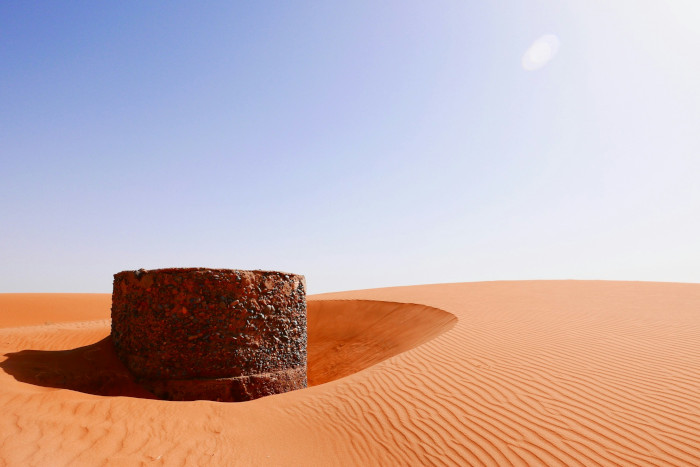
Hazrat Uthmaan (radhiyallahu ‘anhu) Buying the Well of Roomah for the Muslims
Hazrat Uthmaan bin Affaan (radhiyallahu ‘anhu) is one of the great Sahaabah of Rasulullah (sallallahu ‘alaihi wasallam). He has the honour of having married two of the respected daughters of Rasulullah (sallallahu ‘alaihi wasallam). First, Hazrat Uthmaan (radhiyallahu ‘anhu) was married to Hazrat Ruqayyah (radhiyallahu ‘anha), and after she passed away, Rasulullah (sallallahu ‘alaihi wasallam) married him to his second daughter, Hazrat Ummu Kulthoom (radhiyallahu ‘anha).
Allah Ta‘ala had blessed Hazrat Uthmaan (radhiyallahu ‘anhu) with abundant wealth, and he would spend this wealth in the path of Allah Ta‘ala to assist the Muslims and support Islam.
When the Muslims made hijrah and came to live in Madinah Munawwarah, they found it difficult to drink the water of the wells of Madinah Munawwarah as the water of the wells was bitter in taste. However, there was one well, named the well of Roomah, which had sweet water. This well belonged to a Jew who would sell its water to the Sahaabah (radhiyallahu ‘anhum). This made it difficult for the Sahaabah (radhiyallahu ‘anhum), as they had to pay for their drinking water.
When Rasulullah (sallallahu ‘alaihi wasallam) saw the difficulty that the Sahaabah (radhiyallahu ‘anhum) were facing in getting their drinking water, he addressed the Sahaabah (radhiyallahu ‘anhum) and said, “Who will buy the well of Roomah and donate it for all the Muslims, and for this, he will receive a well in Jannah?”
On hearing this amazing reward, of receiving a well in Jannah, Hazrat Uthmaan (radhiyallahu ‘anhu) immediately went to the Jew, who was the owner of the well of Roomah, and offered to buy the well from him. The Jew did not want to sell the whole well, and so he sold half the well to Hazrat Uthmaan (radhiyallahu ‘anhu) for the price of twelve thousand dirhams.
After buying half the well from the Jew, Hazrat Uthmaan (radhiyallahu ‘anhu) said to him, “If you want, we can hang two buckets in the well so that we can both use the well at the same time. Or, if you prefer, we can take turns, in this way that I will use the well on one day, and you will use the well the next day.” The Jew replied that he preferred to take turns, with each person having his own day to use the well.
Accordingly, they started this arrangement. Since Hazrat Uthmaan (radhiyallahu ‘anhu) had bought this well for the Muslims, when it was his day, all the Muslims would come and take water for free. In fact, they would take enough water to last them for two days. The result of this was that when it was the Jew’s day to use the well, nobody would come to buy water from him, as they already had water. In this way, the Jew could not make money from the Muslims by charging them for water any more.
The Jew came to Hazrat Uthmaan (radhiyallahu ‘anhu) and said to him, “You have spoiled my well! Now I cannot make money from it anymore! Why don’t you buy the other half of the well from me and become the owner of the whole well?” Hazrat Uthmaan (radhiyallahu ‘anhu) agreed and paid the Jew the price he asked for the other half of the well, which was eight thousand dirhams.
In this way, Hazrat Uthmaan (radhiyallahu ‘anhu) spent twenty thousand dirhams, of his own money, to buy the well of Roomah and donate it for all the Muslims to use for free. By doing this, not only did he receive the well in Jannah which Rasulullah (sallallahu ‘alaihi wasallam) had promised – but also, as long as people continued to benefit from the water of the well, he continued receiving reward from Allah Ta‘ala.
This was the special heart that Allah Ta‘ala had blessed Hazrat Uthmaan (radhiyallahu ‘anhu) with. Hazrat Uthmaan’s (radhiyallahu ‘anhu) heart was so special because he stayed in the blessed company of Rasulullah (sallallahu ‘alaihi wasallam), so the beautiful qualities of Rasulullah (sallallahu ‘alaihi wasallam) had rubbed onto him. Similarly, the other Sahaabah (radhiyallahu ‘anhum) also had special hearts and were very generous. They would spend their wealth upon people and benefit people.
The Sahaabah (radhiyallahu ‘anhum) understood that when a person passes away and leaves this world, he cannot take any money with him to the Hereafter. However, the money he spends in charity and in doing good works – he will find its magnificent rewards kept for him in the Hereafter.