 Ihyaaud Deen An Effort to Revive Deen in Totality
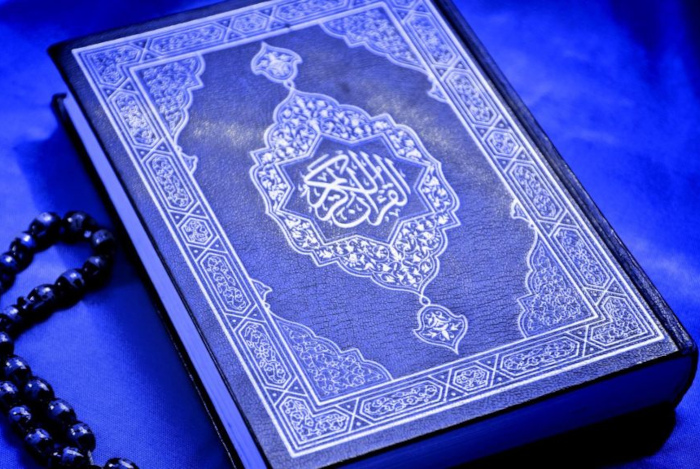
اِذَا الشَّمۡسُ کُوِّرَتۡ ۪ۙ﴿۱﴾ وَ اِذَا النُّجُوۡمُ انۡکَدَرَتۡ ۪ۙ﴿۲﴾ وَ اِذَا الۡجِبَالُ سُیِّرَتۡ ۪ۙ﴿۳﴾ وَ اِذَا الۡعِشَارُ عُطِّلَتۡ ۪ۙ﴿۴﴾ وَ اِذَا الۡوُحُوۡشُ حُشِرَتۡ ۪ۙ﴿۵﴾ وَ اِذَا الۡبِحَارُ سُجِّرَتۡ ۪ۙ﴿۶﴾ وَ اِذَا النُّفُوۡسُ زُوِّجَتۡ ۪ۙ﴿۷﴾ وَ اِذَا الۡمَوۡءٗدَۃُ سُئِلَتۡ ۪ۙ﴿۸﴾ بِاَیِّ ذَنۡۢبٍ قُتِلَتۡ ۚ﴿۹﴾ وَ اِذَا الصُّحُفُ نُشِرَتۡ ﴿۪ۙ۱۰﴾ وَ اِذَا السَّمَآءُ کُشِطَتۡ ﴿۪ۙ۱۱﴾ وَ اِذَا الۡجَحِیۡمُ سُعِّرَتۡ ﴿۪ۙ۱۲﴾ وَ اِذَا الۡجَنَّۃُ اُزۡلِفَتۡ ﴿۪ۙ۱۳﴾ عَلِمَتۡ نَفۡسٌ مَّاۤ اَحۡضَرَتۡ ﴿ؕ۱۴﴾ فَلَاۤ اُقۡسِمُ بِالۡخُنَّسِ ﴿ۙ۱۵﴾ الۡجَوَارِ الۡکُنَّسِ ﴿ۙ۱۶﴾ وَ الَّیۡلِ اِذَا عَسۡعَسَ ﴿ۙ۱۷﴾ وَ الصُّبۡحِ اِذَا تَنَفَّسَ ﴿ۙ۱۸﴾ اِنَّہٗ لَقَوۡلُ رَسُوۡلٍ کَرِیۡمٍ ﴿ۙ۱۹﴾ ذِیۡ قُوَّۃٍ عِنۡدَ ذِی الۡعَرۡشِ مَکِیۡنٍ ﴿ۙ۲۰﴾ مُّطَاعٍ ثَمَّ اَمِیۡنٍ ﴿ؕ۲۱﴾ وَ مَا صَاحِبُکُمۡ بِمَجۡنُوۡنٍ ﴿ۚ۲۲﴾ وَ لَقَدۡ رَاٰہُ بِالۡاُفُقِ الۡمُبِیۡنِ ﴿ۚ۲۳﴾ وَ مَا ہُوَ عَلَی الۡغَیۡبِ بِضَنِیۡنٍ ﴿ۚ۲۴﴾ وَ مَا ہُوَ بِقَوۡلِ شَیۡطٰنٍ رَّجِیۡمٍ ﴿ۙ۲۵﴾ فَاَیۡنَ تَذۡہَبُوۡنَ ﴿ؕ۲۶﴾ اِنۡ ہُوَ اِلَّا ذِکۡرٌ لِّلۡعٰلَمِیۡنَ ﴿ۙ۲۷﴾ لِمَنۡ شَآءَ مِنۡکُمۡ اَنۡ یَّسۡتَقِیۡمَ ﴿ؕ۲۸﴾ وَ مَا تَشَآءُوۡنَ اِلَّاۤ اَنۡ یَّشَآءَ اللّٰہُ رَبُّ الۡعٰلَمِیۡنَ ﴿٪۲۹﴾
When the sun will be folded up and when the stars will fragment and fall (thereby losing their lustre), and when the mountains will be set in motion (and made to move from their places), and when the ten-month pregnant she-camels will be abandoned, and when the wild beasts will be gathered together, and when the oceans will be filled with flames, and when the souls will be paired in groups, and when the female infant child who was buried alive will be asked, for what sin was she killed, and when the scrolls (of deeds) will be opened, and when the sky will be stripped off (and its covering removed), and when the hell-fire will be set ablaze, and when paradise will be brought close, then every soul will know what he (or she) has brought forward. So, I swear by those (stars) that recede, go forward or disappear (and hide themselves), and (I swear) by the night when it departs, and (I swear) by the dawn when it breathes. Undoubtedly, it is the word of a noble messenger (referring to Hazrat Jibreel [‘alaihis salaam]) the one possessing mighty strength and a lofty rank by the Lord of the secure throne, the one who is obeyed there, (and who is) trustworthy (and honest). Your companion (i.e. Rasulullah [sallallahu ‘alaihi wasallam]) is not insane. And certainly, he had seen him (Hazrat Jibreel [‘alaihis salaam]) on the clear horizon. And he (Muhammed [sallallahu alaihi wasallam]) is not miserly with (knowledge of) the unseen (i.e. he does not withhold it from the ummah, but passes it on to them with honesty). And this (Quraan) is not the word of an accursed Shaitaan. So where are you going? It (the Qur’aan Majeed) is nothing else but a message of advice to all the worlds (people of all times), for whoever wills among you to take the straight path. And you shall not will (anything to take place) except that which Allah, the Lord of the worlds, wills (it to happen).
Commentary
In this surah, Surah Takweer, as well as in the following surah, Surah Infitaar, Allah Ta‘ala depicts the various frightening and horrific scenes that will occur on the Day of Qiyaamah. The purpose for explaining the scenes of Qiyaamah is so that man may reflect over the reality of the matter and ponder over how Allah Ta‘ala will cause this entire universe to perish.
Through reflecting over this, man will realize that just as man lives and dies, this world also was created and one day will be destroyed by Allah Ta‘ala. That day – the Day of Qiyaamah – will signify the commencement of the life of the Hereafter, where man will either be sent to Jannah or sent to Jahannum.
The destruction and ruin of this world will commence with the failure and collapse of all worldly systems which allowed the world to continue in harmony. The sun, the moon and the stars, as powerful as they may seem, will all be destroyed by Allah Ta‘ala on that day, and they will no longer fulfil the function for which they were created by Allah Ta‘ala. They will be thrown in the sea which will be ablaze with fire. As all these events will commence, man will realize that the Day of Qiyaamah has come, and soon, the world will be destroyed.
اِذَا الشَّمۡسُ کُوِّرَتۡ ۪ۙ﴿۱﴾
When the sun will be folded up
In this surah, Allah Ta‘ala mentions twelve signs that will occur on the Day of Qiyaamah. The first six signs will occur after Nafkhah-e-Oola (after the trumpet is blown for the first time), and the second six signs will occur after Nafkhah-e-Thaaniyah (after the trumpet is blown for the second time). In the verse above, Allah Ta‘ala explains the first of the six signs that will occur after Nafkhah-e-Oola.
The word “كورت” is derived from the word “تكوير” which means “to become darkened and lose its light”. This is reported from Hazrat Abdullah bin Abbaas (radhiyallahu ‘anhuma) and Hasan Basri (rahimahullah). They both mentioned that this verse means that the sun will lose its function of giving light to the world.
According to Allaamah ibnu Jareer (rahimahullah), the word “تكوير” means to “be folded”. He says that this verse means that the sun will be folded and wrapped up.
According to Allaamah Rabee bin Khaitham, the word “تكوير” means “to be thrown”. He says that this verse means that the sun will be thrown and made to fall from its place.
Reconciling between these three interpretations is possible in this manner that the sun will first lose its light, then be folded and wrapped, and thereafter, it will be thrown into the ocean.
In Saheeh Bukhaari, Hazrat Abu Hurairah (radhiyallahu ‘anhu) reports that Rasulullah (sallallahu ‘alaihi wasallam) said, “On the Day of Qiyaamah, the sun and the moon will be folded (thereby not giving light to the earth),” and in Musnadul Bazzaar, this Hadith is mentioned with the following addition: “On the Day of Qiyaamah, the sun and the moon will be folded (thereby not giving light to the earth) and will be in Jahannum (i.e. they will be put in Jahannum).” (Saheeh Bukhaari #3200 & Musnadul Bazzaar #8696)
Some Muhadditheen mention that the reason why Allah Ta‘ala will put the sun and moon in Jahannum will be to punish the disbelievers and also to humiliate those people who used to worship them and took them as gods in the world. (Faidh-ul-Qadeer 4/177)
Allaamah Ibnu Abi Haatim and Allaamah Ibnu Abid Dunya (rahimahumallah) in Al-Bahr and Al-Ahwaal, and Abu Sheikh (rahimahullah) in Al-Azmah, have all reported the following narration in regard to these verses, “On the Day of Qiyaamah, Allah Ta‘ala will fold the sun, moon and stars and throw them into the ocean. Allah Ta‘ala will then send a wind which will continue to blow until the ocean will turn into fire.”
Some Mufassireen have mentioned that when the sun will be thrown into the ocean, then the ocean will be heated until it turns into fire.
Allaamah Ibnu Abi Haatim (rahimahullah) has reported from Ibnu Abi Maryam (rahimahullah) that Rasulullah (sallallahu ‘alaihi wasallam), in regard to this verse “اِذَا الشَّمۡسُ کُوِّرَتۡ ۪ۙ﴿۱﴾” mentioned that the sun, after being folded, will be put in Jahannum, and the stars, after being made to fragment and fall, will be put into Jahannum, and all those who used to be worshipped besides Allah Ta‘ala will be placed in Jahannum, except for Nabi Isa (‘alaihis salaam) and his mother, Hazrat Maryam (‘alaihas salaam).
The author of Tafseer Mazhari mentioned that some narrations mention that the sun, moon and stars will be thrown into the ocean, while other narrations mention that they will be put into Jahannum. The reconciliation between both is that the sea will turn into fire, and this will then be made part of Jahannum. (Tafseer Mazhari 10/204)
(Tafseer Ibnu Katheer 4/460 & Tafseer Qurtubi 19/227)
وَ اِذَا النُّجُوۡمُ انۡکَدَرَتۡ ۪ۙ﴿۲﴾
and when the stars will fragment and fall (thereby losing their lustre)
The word “انكدرت” is derived from the word “انكدار” which means “to fragment and fall”. The Mufassireen have interpreted this verse to mean that all the stars from the sky will become fragmented and fall into the ocean, as explained in the previous verse in regard to the sun.
وَ اِذَا الۡجِبَالُ سُیِّرَتۡ ۪ۙ﴿۳﴾
and when the mountains will be set in motion (and made to move from their places)
The mountains, as powerful as they are, will move from their places. They will be reduced to smithereens and fly about like snowflakes. Man, on that day, will realize that the Day of Qiyaamah has commenced, and he will leave aside all his valuable wealth, not paying any attention to it, as he will gain conviction that this entire world is coming to an end.
وَ اِذَا الۡعِشَارُ عُطِّلَتۡ ۪ۙ﴿۴﴾
And when the ten-month pregnant she-camels will be abandoned
The Arabs used to regard the ten-month pregnant she-camel to be an extremely valuable asset to them, as they expected her to give birth to more camels and produce abundant milk. It is for this reason that they used to protect her and never let her free.
However, in this verse, while referring to this custom of the Arabs – who were the immediate addressees of the Qur’aan – Allah Ta‘ala depicts the terrifying scene of Qiyaamah, when even the most valuable and favourite wealth to them – the she camel – will be abandoned and neglected by its owners because of the great calamity that they will be facing.
وَ اِذَا الۡوُحُوۡشُ حُشِرَتۡ ۪ۙ﴿۵﴾
and when the wild beasts will be gathered together
In this world, all wild animals do not mix together. Rather, those that are prey flee from those that are predators. However, when Qiyaamah will commence, then the horror will be so overwhelming that all the wild animals will gather together and none will attack the other.
وَ اِذَا الۡبِحَارُ سُجِّرَتۡ ۪ۙ﴿۶﴾
and when the oceans will be filled with flames
The word “سجرت” is derived from the word “تسجير” and it signifies “to set ablaze”. Hence, according to Hazrat Abdullah bin Abbaas (radhiyallahu ‘anhuma), the meaning of this verse is that the sea will be set ablaze and flare up in fire.
According to some Mufassireen, the word “تسجير” refers to “being filled” (i.e. the sea will be filled), while other Mufassireen say that it means “to be mixed” (i.e. the sea will be mixed). None of these interpretations are contrary to each other, as it is possible to reconcile between the three.
First the salt and sweet water will be mixed, and the sea and rivers will be made to flow until they mix and join together, thereby becoming one. In this manner, the entire sea will be filled to capacity, having more water. Thereafter, the sea will be set on fire through the sun, moon and stars being thrown into it. (Tafseer Mazhari 10/205)
Hazrat Ubayy bin Ka’b (radhiyallahu ‘anhu) mentioned:
There are six events which will transpire before the Day of Qiyaamah. While the people will be in their market places, the light of the sun will suddenly disappear. While they will be in that condition, the stars will begin to fragment and fall. In that state, the mountains will collapse to the ground, causing the earth to shake and tremor, and the mountains will become mixed (with the sand after being destroyed). At that time, the jinn and humans will all be in a state of panic. The livestock, birds and wild animals will all be together and mixed up (without one attacking the other) … The jinn will say to the humans, “We will bring you news and information (regarding what is happening).” The jinn will then proceed to the sea and will find that it has become a blazing fire. While they will be in that state, the earth will split with a single crack that will reach as deep as the seventh earth, and as high as the seventh sky. While they will be in that condition, a wind will commence blowing, and this wind will cause everyone to die.” (Tafseer Ibnu Katheer 4/460)
وَ اِذَا النُّفُوۡسُ زُوِّجَتۡ ۪ۙ﴿۷﴾
and when the souls will be paired in groups
In this verse, Allah Ta‘ala commences explaining the six signs that will occur after Nafkhah-e-Thaaniyah (after the trumpet is blown for the second time on the Day of Qiyaamah).
Allah Ta‘ala explains in this verse how the people will be gathered and grouped on the plains of Hashr (Resurrection). Disbelievers will be grouped together, and believers will be grouped together.
Since there are differences between the deeds and habits of believers, and there are differences between the deeds and habits of disbelievers, among the disbelievers there will be different groups, and among the believers as well there will be different groups.
It is reported in Bayhaqi on the authority of Hazrat Nu’maan bin Basheer (radhiyallahu ‘anhu) that Hazrat Umar (radhiyallahu ‘anhu) said that the people doing similar deeds, good or bad, will be grouped together on the Day of Qiyaamah. (Kitaabul Ba’th wan Nushoor #284)
For example, the knowledgeable people among the Muslims who served deen will be made into one group, those who devoted themselves for worship will be made into another group, those who engaged in Jihaad will be made into another group, and those who would spend wealth for the cause of deen will be made into another group.
On the other hand, those who were involved in evil deeds such as theft, robbery, adultery, etc. they will all be assembled together in their respective groups.
وَ اِذَا الۡمَوۡءٗدَۃُ سُئِلَتۡ ۪ۙ﴿۸﴾ بِاَیِّ ذَنۡۢبٍ قُتِلَتۡ ۚ﴿۹﴾
and when the female infant child who was buried alive will be asked, for what sin was she killed
The word “موءودة” in the Arabic language refers to a girl-child that is buried alive. It was a common practice in the days of Jaahiliyyah (the pre-Islamic era) that the people would regard the birth of a girl child as an embarrassment and shame, and therefore, they would bury her alive as soon as she was born. Islam had abolished this barbaric practice entirely and had given complete honour and rights to women, just as men were given honour and rights in the world.
In this verse, Allah Ta‘ala depicts the scene of Qiyaamah where the infant girl-child who was buried alive will be questioned for what crime she was killed by her parents. The apparent verse shows that the question will be posed to the girl herself. This will give her an opportunity to prove her complete innocence, and thus the perpetrators of this crime will be taken to task in the court of Allah Ta‘ala for their injustice which they committed against her, after which they will be duly punished for their wrong.
It is also possible that the question will be posed to the parents of the girl as to why they murdered the child.
The Day of Qiyaamah is referred to as the “Day of Requital” and the “Day of Judgment”. Its very name shows that on that day, every person will be put to a trial where he will have to account for his deeds until justice is meted out to every creation.
From all the injustices perpetrated by people in the world, Allah Ta‘ala singles out this injustice in these verses. When one ponders and carefully looks at this injustice, it appears that such a girl was the victim of the barbarism of her own parents who buried her alive in secrecy. As such, there was no one to raise a complaint against such a brutal act and to demand retaliation on her behalf, especially when she was buried secretly with no evidence to prove the crime.
Hence, through mentioning this crime in the verse, Allah Ta‘ala makes it clear that those criminals against whom there was no evidence, they also will be exposed in the court of justice before Allah Ta‘ala on the Day of Qiyaamah and will be taken to task for their wrong.
Abortion After Four Months is Tantamount to Murder
Burying infants alive or killing them is a major sin and a heinous brutality in the court of Allah Ta‘ala. The Fuqahaa explain that aborting the foetus after four months falls under the same category in Shari’ah, because after four months, the soul is blown into the child, and hence the foetus is treated as a living human being. (Radd-ul-Muhtaar 3/176 & Bahr-ur-Raa’iq 8/233)
Likewise, if a person strikes the stomach of a pregnant woman which causes the child to be aborted, then according to the Fuqahaa, it is compulsory upon the person to set free a slave or pay its price in blood money (i.e. five hundred dirhams) if the child came out dead. On the contrary, if the child came out alive and then died, then in this case, the full diyat (blood money) will be compulsory. (Radd-ul-Muhtaar 6/588)
Abortion before four months is also impermissible and unlawful (except in cases of necessity e.g. rape), but it is a sin of lesser degree compared to the first case (after four months), as it does not amount to the killing of a living human being.
وَ اِذَا الصُّحُفُ نُشِرَتۡ ﴿۪ۙ۱۰﴾
And when the scrolls (of deeds) will be spread out
“And when the scrolls of deeds will be spread out (before man)” refers to when man’s book of deeds will be opened on the Day of Qiyaamah, in full view for everyone to witness, and through the deeds of people, the reality of each person’s condition of success and failure will become evident.
وَ اِذَا السَّمَآءُ کُشِطَتۡ ﴿۪ۙ۱۱﴾ وَ اِذَا الۡجَحِیۡمُ سُعِّرَتۡ ﴿۪ۙ۱۲﴾ وَ اِذَا الۡجَنَّۃُ اُزۡلِفَتۡ ﴿۪ۙ۱۳﴾
And when the sky will be stripped off, and when hellfire will be set ablaze (i.e. it will be brought down, as mentioned in certain Ahaadith), and when Jannah will (also) be brought near
The Mufassireen mention that these signs will occur after the second blowing of the trumpet when all of mankind will be resurrected on the plains of hashr on a new earth with a new sky above them.
The veils of this sky will then be opened so that the scenes of the realm above may be visible to man. At that time, Jannah and Jahannum will be brought down before man’s eyes so that he may witness them for himself first-hand.
It is towards this that Allah Ta‘ala makes reference in these two verses, “And when hellfire will be set ablaze (i.e. it will be brought down, as mentioned in certain Ahaadith), and Jannah will also be brought near.”
Similarly, Allah Ta‘ala also refers to Jahannum being brought down in the following verse of Surah Naazi’aat, “وَ بُرِّزَتِ الۡجَحِیۡمُ لِمَنۡ یَّرٰی ﴿۳۶﴾” (and the Hellfire will brought in full view for all to see)
عَلِمَتۡ نَفۡسٌ مَّاۤ اَحۡضَرَتۡ ﴿ؕ۱۴﴾
Then everyone will know what he/she has brought forward
The words “what he/she has brought forward” refer to man’s good or bad deeds, all of which will be in front of man, either in the form of his book of deeds that will be given to him in his hand (the pious will receive it in their right hand from in front of them, while the evil doers will receive it in their left hand from behind their back), or either their deeds will assume a specific shape and form, as is understood from certain Ahaadith.
فَلَاۤ اُقۡسِمُ بِالۡخُنَّسِ ﴿ۙ۱۵﴾ الۡجَوَارِ الۡکُنَّسِ ﴿ۙ۱۶﴾ وَ الَّیۡلِ اِذَا عَسۡعَسَ ﴿ۙ۱۷﴾ وَ الصُّبۡحِ اِذَا تَنَفَّسَ ﴿ۙ۱۸﴾ اِنَّہٗ لَقَوۡلُ رَسُوۡلٍ کَرِیۡمٍ ﴿ۙ۱۹﴾ ذِیۡ قُوَّۃٍ عِنۡدَ ذِی الۡعَرۡشِ مَکِیۡنٍ ﴿ۙ۲۰﴾ مُّطَاعٍ ثَمَّ اَمِیۡنٍ ﴿ؕ۲۱﴾
So, I swear by those (stars) that recede, go forward or disappear (and hide themselves), and (I swear) by the night when it departs, and (I swear) by the dawn when it breathes. Undoubtedly, it is the word of a noble messenger (referring to Hazrat Jibreel [‘alaihis salaam]) the one possessing mighty strength and a lofty rank by the Lord of the secure throne, the one who is obeyed there, (and who is) trustworthy (and honest)
After mentioning the twelve signs that will occur on the day of Qiyaamah, the first six occurring after the first blowing of the trumpet, and the second six occurring after the second blowing of the trumpet, Allah Ta‘ala takes an oath on certain stars to confirm that the Qur’aan Majeed is the truth that has been sent down from Allah Ta‘ala via Hazrat Jibreel (alayhis salaam) to Hazrat Muhammad (sallallahu alaihi wasallam) in a condition that it has been fully protected from any distortion and change.
Through Allah Ta‘ala taking an oath on certain stars, and thereafter mentioning the medium through which the Qur’aan Majeed was sent down via Hazrat Jibreel (‘alaihis salaam), the message conveyed is that there can be no room for any doubt about the authenticity and veracity of the wahi of the Qur’aan, as the medium via which it was sent down was none other than Hazrat Jibreel (‘alaihis salaam).
The author of Tafseer Jalaalain, Allaamah Suyooti (rahimahullah), mentioned that in these verses, Allah Ta‘ala takes an oath on five stars. (Tafseer Jalaalain pg. 491)
The ancient Greeks called these five stars the “khamsah mutahayyirah” or “the five wandering stars”, since they seemed to stray irregularly across the sky. At times, they are seen moving from East to West, and at other times, from West to East.
Different reasons have been given to explain their irregular movements. The ancient Greeks hold several contradictory explanations for this. The research of modern scientists concurs with some of the ancient philosophers, and differs from some others.
However, we as believers hold the belief that Allah Ta‘ala – the Creator – alone knows the truth and reality of this matter and we do not follow the scientists in this regard. The scientists merely guess and speculate their theories which may be wrong. Therefore, the Qur’aan Majeed did not involve its readers in such a useless discussion. Instead, Allah Ta‘ala showed us what was beneficial – to observe His Infinite Power and Perfect Wisdom so that we may place our faith in Him.
اِنَّہٗ لَقَوۡلُ رَسُوۡلٍ کَرِیۡمٍ ﴿ۙ۱۹﴾ ذِیۡ قُوَّۃٍ عِنۡدَ ذِی الۡعَرۡشِ مَکِیۡنٍ ﴿ۙ۲۰﴾ مُّطَاعٍ ثَمَّ اَمِیۡنٍ ﴿ؕ۲۱﴾
Undoubtedly, it is the word of a noble messenger (referring to Hazrat Jibreel [‘alaihis salaam]) the one possessing mighty strength and a lofty rank by the Lord of the secure throne, the one who is obeyed there, (and who is) trustworthy (and honest)
In these verses, Allah Ta‘ala explains to the ummah some of the praiseworthy qualities of Hazrat Jibreel (‘alaihis salaam). Allah Ta‘ala mentions three special attributes of Hazrat Jibreel (‘alaihis salaam).
1. He is the one who possesses mighty strength and a lofty rank by the Lord of the throne
2. He is obeyed by the angels of the skies
3. He is extremely trustworthy and honest
When these are the sublime qualities of Hazrat Jibreel (‘alaihis salaam), that he is extremely honest and trustworthy, then there can be no doubt or fear of him changing and distorting the wahi before bringing it to Rasulullah (sallallahu alaihi wasallam).
Hazrat Jibreel (‘alaihis salaam) being obeyed in the heavens can be understood from the narration of Saheeh Bukhaari which mentions that when Hazrat Jibreel (‘alaihis salaam) took Rasulullah (sallallahu ‘alaihi wasallam) to the heavens on the occasion of Mi’raaj, then he instructed the angels who were the doorkeepers of the heavens to open the doors of the heavens for himself and for Rasulullah (sallallahu ‘alaihi wasallam). When the angels heard his command, they immediately obeyed him. (Saheeh Bukhaari #349)
After establishing the honesty of Hazrat Jibreel (‘alaihis salaam), Allah Ta‘ala, in the coming verses, speaks about the honesty and reliability of Rasulullah (sallallahu alaihi wasallam), as he is the one who brought the Qur’aan Majeed to the ummah and he is the medium between the creation and the Creator – Allah Ta‘ala. In regard to Rasulullah (sallallahu ‘alaihi wasallam), Allah Ta‘ala said:
وَ مَا صَاحِبُکُمۡ بِمَجۡنُوۡنٍ ﴿ۚ۲۲﴾ وَ لَقَدۡ رَاٰہُ بِالۡاُفُقِ الۡمُبِیۡنِ ﴿ۚ۲۳﴾ وَ مَا ہُوَ عَلَی الۡغَیۡبِ بِضَنِیۡنٍ ﴿ۚ۲۴﴾
Your companion (i.e. Rasulullah [sallallahu ‘alaihi wasallam]) is not insane. And certainly, he had seen him (Hazrat Jibreel [‘alaihis salaam]) on the clear horizon. And he (Muhammed [sallallahu alaihi wasallam]) is not miserly with (knowledge of) the unseen (i.e. he does not withhold it from the ummah, but passes it on to them with honesty).
When Allah Ta‘ala referred to Rasulullah (sallallahu ‘alaihi wasallam) saying “your companion is not insane”, Allah Ta‘ala rebutted the allegations which the kuffaar made against Rasulullah (sallallahu ‘alaihi wasallam) that he is a madman, and thus the Qur’aan Majeed which he is bringing will also have the effects of madness in it (may Allah Ta‘ala forbid!).
Hence, through Allah Ta‘ala exonerating Rasulullah (sallallahu ‘alaihi wasallam) of being affected by madness, then this proves that the Qur’aan Majeed which he has brought is completely reliable and authentic and does not have any sign of falsehood or deviation and misguidance in it.
Allah Ta‘ala also speaks about the relationship that Rasulullah (sallallahu ‘alaihi wasallam) had with Hazrat Jibreel (‘alaihis salaam), as he had met him prior to the revelation of this surah. Allah Ta‘ala says “And certainly, he had seen him (Hazrat Jibreel [‘alaihis salaam]) on the clear horizon.”
In this verse, reference is being made to the time when Rasulullah (sallallahu alaihi wasallam) had seen Hazrat Jibreel (alayhis salaam) seated on a chair between the skies and earth. Rasulullah (sallallahu ‘alaihi wasallam) had seen him in Abtah, in his original angelic form, with six hundred wings. This transpired after the period of fatrah (the pause in the revelation of wahy).
Allaamah Ibnu Katheer (rahimahullah) mentions that after Rasulullah (sallallahu alaihi wasallam) was commissioned with nubuwwah and Surah Iqra was revealed, there was a period of time in which Rasulullah (sallallahu ‘alaihi wasallam) did not receive any wahi of the Qur’aan Majeed.
This pause in the revelation of wahi continued, until one day, Hazrat Jibreel (‘alaihis salaam) appeared before Rasulullah (sallallahu ‘alaihi wasallam) in Abtah, in his original angelic form, with six hundred wings. He was seated on a chair between the skies and earth.
Surah Muddatthir was then revealed, after which the wahi began to be revealed upon Rasulullah (sallallahu ‘alaihi wasallam) in succession. (Tafseer Ibnu Katheer 4/237, Fat-hul Baari 1/34)
Imaam Bukhaari (rahimahullah) has recorded this incident from Hazrat Jaabir (radhiyallahu ‘anhu) who reports that Rasulullah (sallallahu ‘alaihi wasallam) said, “While I was walking, I heard a voice call out from the sky. When I raised my gaze, I saw the very same angel who had come to me in the Cave of Hira, seated upon a chair between the sky and earth. I was filled with awe and fell to the ground (unconscious). I then returned home to my wife (Hazrat Khadijah [radhiyallahu ‘anha]) saying, ‘Cover me! Cover me!’.” (Saheeh Bukhaari #3238)
Some Mufassireen have mentioned that this verse “And certainly, he had seen him (Hazrat Jibreel [‘alaihis salaam]) on the clear horizon,” refers to the occasion when Rasulullah (sallallahu ‘alaihi wasallam) had asked Hazrat Jibreel (‘alaihis salaam) to appear before him in his original angelic form.
Hazrat Jibreel (‘alaihis salaam) told Rasulullah (sallallahu ‘alaihi wasallam) to make dua to Allah Ta‘ala to make this happen. After making dua, Allah Ta‘ala caused Rasulullah (sallallahu ‘alaihi wasallam) to see Hazrat Jibreel (‘alaihis salaam) in his original form with six hundred wings, and on seeing him in this form, Rasulullah (sallallahu ‘alaihi wasallam) fell unconscious. (Tafseer Ibnu Katheer 4/238, Tafseer Jalaalain 437, Sunan Tirmizi #3278)
Thereafter, Allah Ta‘ala explains the honesty of Rasulullah (sallallahu ‘alaihi wasallam) by mentioning that he does not withhold information of the unseen. Imaam Qataadah (rahimahullah) said, “The Qur’aan was in the unseen (not known to man). Thereafter, Allah Ta‘ala revealed it to Muhammed (sallallahu ‘alaihi wasallam), after which he did not withhold it from the people. Rather, he conveyed the Qur’aan Majeed to the people, propagated it to them and shared it with every person who wished to benefit from it.” (Tafseer Ibnu Katheer 4/465)
وَ مَا ہُوَ بِقَوۡلِ شَیۡطٰنٍ رَّجِیۡمٍ ﴿ۙ۲۵﴾
And this (Quraan) is not the word of an accursed Shaitaan
In this verse, Allah Ta‘ala clears any doubts that can arise in the minds of people that perhaps at the time when Hazrat Jibreel (alayhis salaam) brought the wahi down from the heavens to the earth, there could have been some external influences of Shaitaan upon the wahi.
Allah Ta‘ala then says:
فَاَیۡنَ تَذۡہَبُوۡنَ ﴿ؕ۲۶﴾ اِنۡ ہُوَ اِلَّا ذِکۡرٌ لِّلۡعٰلَمِیۡنَ ﴿ۙ۲۷﴾ لِمَنۡ شَآءَ مِنۡکُمۡ اَنۡ یَّسۡتَقِیۡمَ ﴿ؕ۲۸﴾ وَ مَا تَشَآءُوۡنَ اِلَّاۤ اَنۡ یَّشَآءَ اللّٰہُ رَبُّ الۡعٰلَمِیۡنَ ﴿٪۲۹﴾
So where are you going? It (the Qur’aan Majeed) is nothing else but a message of advice to all the worlds (people of all times), for whoever wills among you to take the straight path
The message of this verse is that when the Qur’aan Majeed is the pure word sent down from the Pure Being – Allah Ta‘ala, via the pure angel – Hazrat Jibreel (‘alaihis salaam), to the most pure servant – Hazrat Muhammed (sallallahu alaihi wasallam), and it contains the pure guidance for humanity in totality, then “O kuffaar! Why are you turning away from the message of Allah Ta‘ala which guides you towards the straight path – the path of righteousness and the path to Jannah?”
However, in the end, Allah Ta‘ala mentions who are the people who will be guided to the straight path through the Qur’aan. It will be those who are looking for the guidance of the Qur’aan Majeed and Shari’ah and wish to benefit from it. Such are the people who receive guidance from Allah Ta‘ala via the Qur’aan Majeed.
وَ مَا تَشَآءُوۡنَ اِلَّاۤ اَنۡ یَّشَآءَ اللّٰہُ رَبُّ الۡعٰلَمِیۡنَ ﴿٪۲۹﴾
and you shall not will (anything to take place) except that which Allah, the Lord of the worlds, wills (it to happen).
In this verse, Allah Ta‘ala explains that man cannot do anything without the will of Allah Ta‘ala. This indicates towards the fact that man has been given a choice to do right or wrong, but ultimately, Allah Ta‘ala will make everything happen according to His decree and plan.
When man intends to do good, then Allah Ta‘ala allows it to happen, and Allah Ta‘ala thereafter blesses him and rewards him. When man intends to do evil, then Allah Ta‘ala allows the evil to take place, and thereafter Allah Ta‘ala punishes him.
Allah Ta‘ala cannot be blamed for the wrong that man carries out in the world, as Allah Ta‘ala says in another verse: “وَ مَا رَبُّکَ بِظَلَّامٍ لِّلۡعَبِیۡدِ” (and your Rabb does not oppress the servants).
Therefore, from this, we understand that the Qur’aan Majeed is a message of advice for all the worlds, but only those who are granted tawfeeq by Allah Ta‘ala will benefit from the advice.
As for others who do not accept, then the message of the Qur’an Majeed is clear to them also, but on account of them turning away, Allah Ta‘ala does not give them tawfeeq to follow the guidance due to their hearts being averse to it.
This verse may be understood as a consolement to Rasulullah (sallallahu ‘alaihi wasallam) for the kuffaar not accepting his message.