 Ihyaaud Deen An Effort to Revive Deen in Totality
The Hunger Suffered by Hazrat Abu Hurairah (radhiyallahu ‘anhu)
Once, Hazrat Abu Hurairah (radhiyallahu ‘anhu) wiped his nose with a piece of fine cloth, and then said to himself, “Look at the condition of Abu Hurairah! Today he cleans his nose with fine cloth, whereas there was a time when I remember him lying down unconscious between the mimbar (pulpit) and the house of Rasulullah (sallallahu ‘alaihi wasallam), and people would put their feet on his neck thinking that he was suffering from epilepsy. Little did they know that all that was caused through hunger, and not epilepsy (or any illness).”
Note:
Hazrat Abu Hurairah (radhiyallahu ‘anhu) would remain hungry for days at a time, and he was often so overcome with pangs of hunger that he would fall unconscious. Mistaking this as attacks of epilepsy, people would place their feet on his neck, which was how they treated this illness in those times.
Hazrat Abu Hurairah (radhiyallahu ‘anhu) was among those Sahaabah who would exercise extreme patience at the time of hardship and he would remain contented in whichever condition Allah Ta‘ala kept him. He would spend many days in hunger. After the demise of Rasulullah (sallallahu ‘alaihi wasallam), when Allah Ta‘ala bestowed the Muslims with many conquests, then he was granted ample wealth and riches.
Hazrat Abu Hurairah (radhiyallahu ‘anhu) would also exert himself in ibaadah. He had a bag full of date seeds with him, and he would make zikr and recite tasbeeh on these seeds. When the bag would become empty, his slave girl would refill it and place it by him again so that he could continue making zikr.
It was also his practice to divide the night into three portions between himself, his wife and his servant. They would take turns, one at a time, to engage in ibaadah the entire night.
(The author, Hazrat Sheikhul Hadith Moulana Muhammed Zakariyya (rahimahullah) says) I have heard from my father that this was also the practice of my grandfather. My father would remain engaged in his studies until approximately 1 o’clock in the morning. At that time, my grandfather would wake up for tahajjud, and after relieving himself and making wudhu, he would send my father to sleep and get engaged in his tahajjud salaah. He would remain occupied in performing tahajjud salaah until approximately 45min before subah saadiq. He would then awaken my uncle for tahajjud, after which, in emulation of the blessed sunnah of Rasulullah (sallallahu ‘alaihi wasallam), he would rest for a short while before the fajr salaah. May Allah Ta‘ala bless us to follow in the footsteps of these people – ameen.
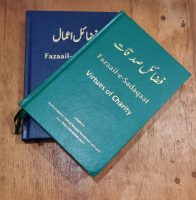
(Fazaa’il-e-A’maal [English] pg. 62-63, [Urdu] pg. 47)