 Ihyaaud Deen An Effort to Revive Deen in Totality
بِسۡمِ اللّٰہِ الرَّحۡمٰنِ الرَّحِیۡمِ
لَاۤ اُقۡسِمُ بِہٰذَا الۡبَلَدِ ۙ﴿۱﴾ وَ اَنۡتَ حِلٌّۢ بِہٰذَا الۡبَلَدِ ۙ﴿۲﴾ وَ وَالِدٍ وَّ مَا وَلَدَ ۙ﴿۳﴾ لَقَدۡ خَلَقۡنَا الۡاِنۡسَانَ فِیۡ کَبَدٍ ؕ﴿۴﴾ اَیَحۡسَبُ اَنۡ لَّنۡ یَّقۡدِرَ عَلَیۡہِ اَحَدٌ ۘ﴿۵﴾یَقُوۡلُ اَہۡلَکۡتُ مَالًا لُّبَدًا ؕ﴿۶﴾ اَیَحۡسَبُ اَنۡ لَّمۡ یَرَہٗۤ اَحَدٌ ؕ﴿۷﴾ اَلَمۡ نَجۡعَلۡ لَّہٗ عَیۡنَیۡنِ ۙ﴿۸﴾ وَ لِسَانًا وَّ شَفَتَیۡنِ ۙ﴿۹﴾ وَ ہَدَیۡنٰہُ النَّجۡدَیۡنِ ﴿ۚ۱۰﴾ فَلَا اقۡتَحَمَ الۡعَقَبَۃَ ﴿۫۱۱﴾ وَ مَاۤ اَدۡرٰىکَ مَا الۡعَقَبَۃُ ﴿ؕ۱۲﴾ فَکُّ رَقَبَۃٍ ﴿ۙ۱۳﴾ اَوۡ اِطۡعٰمٌ فِیۡ یَوۡمٍ ذِیۡ مَسۡغَبَۃٍ ﴿ۙ۱۴﴾ یَّتِیۡمًا ذَا مَقۡرَبَۃٍ ﴿ۙ۱۵﴾ اَوۡ مِسۡکِیۡنًا ذَا مَتۡرَبَۃٍ ﴿ؕ۱۶﴾ ثُمَّ کَانَ مِنَ الَّذِیۡنَ اٰمَنُوۡا وَ تَوَاصَوۡا بِالصَّبۡرِ وَ تَوَاصَوۡا بِالۡمَرۡحَمَۃِ ﴿ؕ۱۷﴾ اُولٰٓئِکَ اَصۡحٰبُ الۡمَیۡمَنَۃِ ﴿ؕ۱۸﴾ وَ الَّذِیۡنَ کَفَرُوۡا بِاٰیٰتِنَا ہُمۡ اَصۡحٰبُ الۡمَشۡـَٔمَۃِ ﴿ؕ۱۹﴾ عَلَیۡہِمۡ نَارٌ مُّؤۡصَدَۃٌ ﴿٪۲۰﴾
I take an oath by this city (of Makkah Mukarramah), and you (O Muhammed [sallallahu ‘alaihi wasallam]) are free to live in this city, and I take an oath by the father and that which was born (of him) – indeed We have created man (to live in this world) in hard struggle. Does he (man) think that no one will ever have any power over him? He says, “I have spent a lot of wealth.” Does he think that no one has seen him? Have We not made for him two eyes, and a tongue and two lips, and (have We not) shown him the two paths (of good and evil)? But he has not attempted to pass through the steep mountain pass, and what may let you know what the steep mountain pass is? (It is) freeing the neck of a slave (from slavery), or feeding in a day of severe hunger, an orphan of near relationship, or a needy person lying in the sand (due to poverty). And then he should be from those who believe and advise one another towards patience and advise one another towards kindness (and compassion). Those are the people of the right hand (their books of deeds will be given to them in their right hands). As for those who reject Our verses, they are the people of the left hand (their books of deeds will be given to them in their left hands). Over them will be the fire, enveloping them (from all sides with closed exits).
Commentary:
The Special position of Makkah Mukarramah Among All Cities of the World
لَاۤ اُقۡسِمُ بِہٰذَا الۡبَلَدِ ۙ﴿۱﴾ وَ اَنۡتَ حِلٌّۢ بِہٰذَا الۡبَلَدِ ۙ﴿۲﴾
I take an oath by this city (of Makkah Mukarramah), and you (O Muhammed [sallallahu ‘alaihi wasallam]) are free to live in this city
This surah commences with the particle “لا” mentioned before the oath. According to the Mufassireen, this particle “لا” does not have any specific meaning, rather it has come to strengthen and emphasize the oath taken.
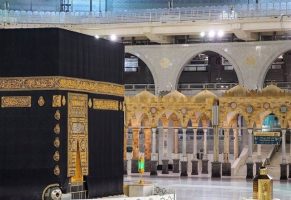
The word “هٰذَا الْبَلَد” (this city) refers to the Holy City of Makkah Mukarramah, as in Surah At-Teen where Allah Ta‘ala also takes an oath on Makkah Mukarramah saying “وَ ہٰذَا الۡبَلَدِ الۡاَمِیۡنِ” (by this peaceful city i.e. of Makkah Mukarramah).
From this verse of Surah Balad wherein Allah Ta‘ala takes an oath on this city, and the verse in Surah At-Teen “وَ ہٰذَا الۡبَلَدِ الۡاَمِیۡنِ”, where Allah Ta‘ala takes an oath on this city and also describes it with the quality of being peaceful, we understand that the city of Makkah Mukarramah is an extremely blessed city in the sight of Allah Ta‘ala. This shows the superiority of this city over other cities of the world.
Hazrat Abdullah bin Adiyy (radhiyallahu ‘anhu) reports that when Rasulullah (sallallahu ‘alaihi wasallam) was leaving Makkah Mukarramah to perform the hijrah to Madinah Munawwarah, he addressed the city of Makkah Mukarramah and said, “By Allah! You are dearer to Allah than the entire earth! If I was not forced out of this place, I would have never left you!”
The city of Makkah Mukarramah is a city of great sanctity wherein waging war, killing people, or even killing game animals, is not permissible. In fact, the entire land is so blessed and sanctified that it is not even permissible for one to cut down the trees or break the plants which grow there on their own (without people planting it).
The word “حِلٌّ” has two tafseers (i.e. two meanings). The first meaning is “to reside in a certain place”. According to this tafseer, the word “حِلٌّ” is derived from the word “حُلُوْل” which means “to reside”. If this word is taken in this meaning, then the translation of the verse is “and you (O Muhammed [sallallahu ‘alaihi wasallam]) are free to live in this city (of Makkah Mukarramah)”.
The meaning understood from this verse is that Makkah Mukarramah is a blessed and sacred city, and through Rasulullah (sallallahu ‘alaihi wasallam) residing in it, the sanctity and honour of the city is further enhanced and increased.
The second meaning of the word “حِلٌّ” is “to be lawful”. According to this tafseer, the word “حِلٌّ” is derived from the word “حِلَّةٌ” which means “to be lawful”. If this word is taken in this meaning, then the translation of the verse is “and you (O Muhammed [sallallahu ‘alaihi wasallam]) are allowed (to fight) in this city (i.e. fighting against the kuffaar is made lawful for you in the city).” Based on this tafseer, this verse indicates towards the conquest of Makkah Mukarramah which took place in the 8th year after the hijrah.
On this occasion, Allah Ta‘ala made it lawful for Rasulullah (sallallahu ‘alaihi wasallam) and the Sahaabah (radhiyallahu ‘anhum) to wage war against the kuffaar in Makkah Mukarramah for a portion of the day.
It should be borne in mind that the permission which Allah Ta‘ala granted Rasulullah (sallallahu ‘alaihi wasallam) on the occasion of the conquest of Makkah Mukarramah, to wage war against the kuffar in the city of Makkah Mukarramah, was only for a portion of the day until they had conquered the city. Thereafter, the sanctity of the city once again returned in regard to it being impermissible to wage war in it. This has been clearly mentioned in the Hadith of Saheeh Bukhaari.
وَ وَالِدٍ وَّ مَا وَلَدَ ۙ﴿۳﴾
and I take an oath by the father and that which was born (of him)
The verse “I take an oath by the father” refers to Nabi Aadam (‘alaihis salaam), and the verse “I take an oath on that which was born to him” refers to his entire progeny from the inception of the world until the end of the world. Thus, in this verse, Allah Ta‘ala takes an oath by Nabi Aadam (‘alaihis salaam) and all the children of Nabi Aadam (‘alaihis salaam) who will come in the world until the Day of Qiyaamah.
Every Human Will Have to Undergo Difficulty in Life
لَقَدۡ خَلَقۡنَا الۡاِنۡسَانَ فِیۡ کَبَدٍ ؕ﴿۴﴾
Indeed, We have created man (to live in this world) in hard struggle
After taking four oaths, Allah Ta‘ala explains the subject of the oath when He mentions “indeed We have created man (to live in this world) in hard struggle”. The meaning of this verse is that throughout man’s life, he will have to undergo hardship and difficulty.
It is reported in the narration of Hazrat Abdullah bin Abbaas (radhiyallahu ‘anhuma) that man, at the beginning, was conceived in the womb of his mother where he remained confined. Then came the difficulty of childbirth, followed by the effort of suckling and being weaned. This is followed by seeking a livelihood and other necessities of life with hardship. Then man endures the hardships and the prolonged suffering of old age, death, the grave, resurrection, accountability of deeds before Allah Ta‘ala, reward and punishment.
The difficulties of life are not restricted to man, but rather animals also undergo these difficulties. Nevertheless, man has specifically been mentioned in this regard on account of the intelligence and understanding which Allah Ta‘ala has granted him compared to animals.
Lastly, the greatest difficulty and hardship which man will have to bear will be the difficulty and hardship on the Day of Qiyaamah when man will be required to give an account for his deeds. This difficulty and hardship will only be borne by man, as animals will not have to give an account for their actions on the Day of Qiyaamah.
By Allah Ta‘ala taking an oath upon Makkah Mukarramah, Nabi Aadam (‘alaihis salaam) and his entire progeny until the end of time, and then mentioning “indeed, We have created man in hard struggle”, Allah Ta‘ala makes it clear to man that the purpose for Allah Ta‘ala creating him is for him to endure hardships for the sake of Allah Ta‘ala, and in this way, earn his Jannah.
Therefore, if man feels that he can live a life without any difficulty and hardship in this world, without him having to bear any responsibilities and fulfil the obligations of deen (performing salaah, discharging zakaat, fasting, performing haj, fulfilling the rights he owes to his parents, wife, children, relatives, those he interacts with, etc.), then this notion is incorrect, as Allah Ta‘ala makes it abundantly clear from this verse that every human being will have to undergo difficulty in this worldly life.
Man should understand that for any material possession he wishes to acquire in this material abode, he will have to work hard to obtain it, and without undergoing difficulty and hardship, his goal will not be achieved. In the same way, man should understand that in order to acquire the ultimate bounties of Jannah, he will have to struggle hard in this world to oppose his nafs in fulfilling the commands of Allah Ta‘ala, and thereafter, Allah Ta‘ala will bless him with the bounties of Jannah.
The Arrogant Attitude of the Disbeliever
اَیَحۡسَبُ اَنۡ لَّنۡ یَّقۡدِرَ عَلَیۡہِ اَحَدٌ ۘ﴿۵﴾یَقُوۡلُ اَہۡلَکۡتُ مَالًا لُّبَدًا ؕ﴿۶﴾ اَیَحۡسَبُ اَنۡ لَّمۡ یَرَہٗۤ اَحَدٌ ؕ﴿۷﴾
Does he (man) think that no one will ever have any power over him? He says, “I have spent a lot of wealth.” Does he think that no one has seen him?
In these verses, Allah Ta‘ala explains some of the evil qualities of a disbeliever. In the first and third verses, Allah Ta‘ala shows the reason why the kaafir treads on the path of disbelief and does not want to submit before Allah Ta‘ala. He thinks that no one has control over his life and he can do as he pleases. Similarly, he thinks that no one is watching him and he is not accountable for his deeds in the Hereafter.
Had the kaafir believed in Allah Ta‘ala and recognized that Allah Ta‘ala has complete control over him, and one day, he will have to give an account for his deeds in the Hereafter, then he would not have shown arrogance in the earth, nor would he have transgressed the limits in committing evil deeds.
In the second verse, Allah Ta‘ala shows the kaafir’s evil quality of pride, boastfulness and showing off before people over the wealth he spends. Through showing off his wealth before people, and doing things for name and fame, his life is centred around his own greatness, as he sees everything to be acquired through his own achievements. He does not recognize the Giver of everything – Allah Ta‘ala, the One who granted him financial prosperity in the world and allowed him to live a comfortable life.
The Priceless Bounties of the Eyes, Tongue and Lips
اَلَمۡ نَجۡعَلۡ لَّہٗ عَیۡنَیۡنِ ۙ﴿۸﴾ وَ لِسَانًا وَّ شَفَتَیۡنِ ۙ﴿۹﴾ وَ ہَدَیۡنٰہُ النَّجۡدَیۡنِ ﴿ۚ۱۰﴾
Have We not made for him two eyes, and a tongue and two lips, and (have We not) shown him the two paths (of good and evil)?
In the preceding verses, Allah Ta‘ala shows the life of heedlessness that the kaafir leads, thinking that no one has power over him, and no one is watching him. The current verses discuss the special favours of Allah Ta‘ala upon him i.e. the two eyes, the tongue and the two lips which Allah Ta‘ala has granted him. Allah Ta‘ala granted him these favours so that he may recognize Allah Ta‘ala and bring imaan in Him.
The first favour which Allah Ta‘ala discusses in this verse is the favour of the eyes. When one examines the pair of eyes which Allah Ta‘ala has granted man, then one will realize that they are a unique favour of Allah Ta‘ala through which one can see the world around him.
The optic nerves and tissues of the eyes are extremely delicate, and for their protection, Allah Ta‘ala has created eyebrows, eyelashes and eyelids in front and around them. All these work like an automatic machine in protecting the eyes.
When a harmful object is seen coming from the front, the eyelids close on their own. The eyelashes block the dust from getting into the eyes. Apart from this, the facial bones, especially the eye sockets and the cheek bones, also protect the eyes, so that even if one were to fall on one’s face or something were to fall on one’s face, the eyes would remain safe.
The second and third favours which Allah Ta‘ala discusses in this verse are the favours of the tongue and lips. The tongue and lips enable man to pronounce the different sounds, letters and words when speaking and communicating with others.
When one observes the tongue, one sees that it is a long piece of flesh fixed to the bottom of the mouth that conveys the thoughts of the heart. A thought first occurs in the heart, and then the brain interprets it and prepares appropriate words to express it. Thereafter, these words are uttered by the tongue. Such a complex task is performed so swiftly that the listener does not even realise how many systems Allah Ta‘ala put in place in the human body that work harmoniously before the distinguishable sounds, letters and words are uttered by man.
The tongue is such a swift organ that within a few moments, it can utter a word that can become the means for one entering Jannah or Jahannum. If a kaafir recites the kalimah, he will enter into the fold of Islam and be worthy of entry into Jannah, and if a believer utters words of kufr and shirk, he will come out of the fold of Islam and be worthy of entry into Jahannum.
In essence, the tongue has the potential to bring about great benefit, and also has the potential to bring about great destruction. It is a double-edged sword that can cut down an enemy, and it can also cut one’s own throat. Therefore, Allah Ta‘ala has kept it covered within the case of two lips. Probably, this is the reason why the pair of lips is mentioned.
Before speaking, a person should ponder and think whether what he is going to say is going to be harmful and destructive in this world and the next, or whether it will be beneficial to him in this world and the next. After pondering, if he finds that what he is going to say is going to be beneficial, then he should open his mouth and speak, otherwise he should close his lips and protect his tongue. It is for this reason that Allah Ta‘ala placed the tongue within the two cages of the lips.
Apart from the pair of eyes, the pair of lips and the tongue, Allah Ta‘ala has granted man the ability of the brain to distinguish right from wrong and good from evil. Thus, in this verse, Allah Ta‘ala says, “and (have We not) shown him the two paths (of good and evil)?”
The word “نَجْدَيْن” (two paths) is derived from the word “نَجْد” which literally means “an elevated path”. Here, it refers to the two clear paths – the path of Islam and the path of kufr. The path of Islam is the path of good, and the path of kufr is the path of evil.
Thus, when Allah Ta‘ala says “and (have We not) shown him the two paths”, Allah Ta‘ala made it clear that the path of Islam and the path of kufr (the path of good and the path of evil) are both clear before man in the world, yet man, of his own choice and will, opts to tread on the path of kufr and the path of evil. Thus, the kaafir cannot blame Allah Ta‘ala for the wrongs that he is doing and the end that he will face of going to Jahannum for his evil deeds which he committed in the world.
A similar verse is mentioned in Surah Shams where Allah Ta‘ala says:
فَاَلۡہَمَہَا فُجُوۡرَہَا وَ تَقۡوٰىہَا ۪ۙ﴿۸﴾
Then He (i.e. Allah Ta‘ala) inspired it (the soul of man) with its (consciousness to discern between) evil and piety.
From this verse, in Surah Shams, it is clear that Allah Ta‘ala created within man a conscience to discern between right and wrong. Apart from this conscience which guides man to the right, Allah Ta‘ala also sent the Ambiyaa (‘alaihimus salaam) and revealed the Heavenly Books and Scriptures upon them to guide man to the straight path.
The crux of the matter is that if a heedless disbeliever, who denies the absolute power of Allah Ta‘ala, had to look within his own body, he would be able to see such signs of Allah’s power and greatness within his own body which are sufficient to guide him towards believing in Allah Ta‘ala.
If the kaafir cannot see the power of Allah Ta‘ala in his eyes, tongue and lips, then he should look at his mind that allows him to function in life and make decisions daily to tread on the path of good or evil. This ability to reason and discern between good and bad has been granted to him by none other than Allah Ta‘ala.
After pondering over the power of Allah Ta‘ala, he should realize that Allah Ta‘ala has the power to resurrect him on the Day of Qiyaamah and hold him accountable for his deeds.
The Path of Salvation
فَلَا اقۡتَحَمَ الۡعَقَبَۃَ ﴿۫۱۱﴾ وَ مَاۤ اَدۡرٰىکَ مَا الۡعَقَبَۃُ ﴿ؕ۱۲﴾ فَکُّ رَقَبَۃٍ ﴿ۙ۱۳﴾ اَوۡ اِطۡعٰمٌ فِیۡ یَوۡمٍ ذِیۡ مَسۡغَبَۃٍ ﴿ۙ۱۴﴾ یَّتِیۡمًا ذَا مَقۡرَبَۃٍ ﴿ۙ۱۵﴾ اَوۡ مِسۡکِیۡنًا ذَا مَتۡرَبَۃٍ ﴿ؕ۱۶﴾
But he has not attempted to pass through the steep mountain pass, and what may let you know what the steep mountain pass is? (It is) freeing the neck of a slave (from slavery), or feeding in a day of severe hunger, an orphan of near relationship, or a needy person lying in the sand (due to poverty).
The word “عقبة” refers to a steep mountain pass (a road between two mountains). When a person is being pursued by the enemy, then he climbs the mountain and escapes by crossing the mountain pass.
However, in this verse, the word “عقبة” refers to carrying out actions of devotion and obedience to Allah Ta‘ala in order to gain entry into Jannah and save oneself from the fire of Jahannum. Just as the mountain pass saves man when escaping from the enemy, similarly these actions of righteousness will save man from the torment of Jahannum in the Hereafter.
Allah Ta‘ala then mentions some of these acts of obedience which will save man from Jahannum, while condemning the disbeliever for not carrying out these actions. The first action is “freeing the neck of a slave”. Freeing the neck of a slave refers to freeing a slave from slavery. This is an extremely virtuous action which assists one in the Hereafter.
The second action is feeding people – especially such people who are suffering hunger and starvation. Allah Ta‘ala says “feeding in a day of severe hunger, an orphan of near relationship, or a needy person lying in the sand (due to poverty)”. Feeding people, at all times, is rewarding. However, at certain times, the feeding will earn a greater reward, such as the time when people are in severe hunger and starvation.
Similarly, feeding certain people also causes one to acquire additional reward, such as one feeding an orphan who is closely related to one in kinship, or feeding a needy person who is undergoing misery due to abject poverty.
If one feeds a relative who is an orphan, then one will acquire extra reward – reward for feeding a person in need, reward for feeding an orphan who doesn’t have parents to care for him, and reward for maintaining family ties and fulfilling the rights of one’s kith and kin.
ثُمَّ کَانَ مِنَ الَّذِیۡنَ اٰمَنُوۡا وَ تَوَاصَوۡا بِالصَّبۡرِ وَ تَوَاصَوۡا بِالۡمَرۡحَمَۃِ ﴿ؕ۱۷﴾ اُولٰٓئِکَ اَصۡحٰبُ الۡمَیۡمَنَۃِ ﴿ؕ۱۸﴾ وَ الَّذِیۡنَ کَفَرُوۡا بِاٰیٰتِنَا ہُمۡ اَصۡحٰبُ الۡمَشۡـَٔمَۃِ ﴿ؕ۱۹﴾ عَلَیۡہِمۡ نَارٌ مُّؤۡصَدَۃٌ ﴿٪۲۰﴾
And then he should be from those who believe and advise one another towards patience and advise one another towards kindness (and compassion). Those are the people of the right hand (their books of deeds will be given to them in their right hands). As for those who reject our verses, they are the people of the left hand (their books of deeds will be given to them in their left hands). Over them will be the fire, enveloping them (from all sides with closed exits).
In these verses, Allah Ta‘ala explains that the disbeliever does not carry out works of righteousness and piety in his life, and he also does not possess imaan.
Possessing imaan is the foundation for all good deeds to be accepted in the Hereafter. Hence, if a disbeliever does these good deeds, of feeding the hungry, the orphan relatives and those in abject poverty, then though he will be rewarded by Allah Ta‘ala in this world, he will not gain salvation in the Hereafter, as he does not possess imaan.
Therefore, to acquire entry into Jannah and salvation from the fire of Jahannum, merely carrying out good deeds is not sufficient. Rather, one will have to bring imaan and thereafter carry out righteous deeds.
From these verses, we also understand that it is an obligation of the believers to “advise one another towards patience and advise one another towards kindness (and compassion)”.
“صبر” (patience) refers to restraining the nafs from all sins, while compelling the nafs to fulfil all its obligations – whether obligations owed to Allah Ta‘ala or the creation.
“مرحمة” (kindness) means that one should feel sympathy for the plight of others, show them kindness, and refrain from hurting or oppressing any person in any way at any time in one’s life.
Thus, this verse encourages Muslims to encourage one another towards patience and kindness in all departments of deen. In this way, this verse encapsulate all the commands and injunctions of the entire deen of Islam.