 Ihyaaud Deen An Effort to Revive Deen in Totality

Hazrat Moulana Qaasim Nanotwi (rahimahullah) was a soft and kind-hearted person who showed great compassion when dealing with the servants of Allah Ta‘ala. If he had seen any person being oppressed, then he would be greatly hurt and try his best to correct the situation. This quality of compassion for the creation was among the mubaarak qualities of Rasulullah (sallallahu ‘alaihi wasallam). Below is an incident of this nature:
Correcting the Person who Slapped the Beggar
On one occasion, Hazrat Nanotwi (rahimahullah) was a guest at the home of a person named Sayyid Mehrbaan Ali, a wealthy nawaab of Gilauti. The nawaab invited Hazrat Nanotwi (rahimahullah) to deliver a lecture at his home.
At the time of asr, before the bayaan, a beggar came to the home asking for some food or money. Although the workers refused to give him something, he continued to ask them for something. One of the workers, in a fit of anger, slapped the beggar on his face, causing him to start weeping.
When Hazrat Nanotwi (rahimahullah) learnt of what had happened, he was deeply affected. He immediately called the worker and reprimanded him for slapping the beggar. Moulana (rahimahullah) said to him, “Why did you hit the beggar? You will not live forever in this world!”
In other words, Hazrat Nanotwi (rahimahullah) was explaining to this person that one day, you will have to leave this world and give an account to Allah Ta‘ala for your deeds, and Allah Ta‘ala will question you if you oppressed the creation when dealing with them.
Saying this, Hazrat Nanotwi (rahimahullah) stood up, and instead of coming to the place where he was going to deliver the talk, he instead walked away and sat down under a tree, as he was grieved over what had happened.
When the host came to know that Hazrat Moulana (rahimahullah) was affected over what had transpired, and therefore did not come to give the bayaan, he became worried. He did not have the courage to approach Hazrat Nanotwi (rahimahullah), so he sent someone to look for that beggar in order to ask him for maaf and please him.
When the beggar was brought to him, he asked him for forgiveness and gave him five rupees to please him for whatever had occurred. He then said to the beggar, “Please go to Hazrat Nanotwi (rahimahullah) and ask him to forgive us, as Moulana is displeased with us.”
The beggar obliged and went to speak to Hazrat Nanotwi (rahimahullah). Only then was Hazrat Moulana (rahimahullah) happy, and thereafter he came to deliver the talk. (Ml Muhammed Qaasim Nanotwi – Hayaat aur Kaarnaame pg. 185-186)
Taking Poor People for Haj
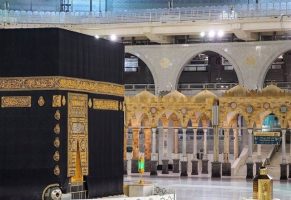
In the year 1294 AH (1877), Hazrat Moulana Qaasim Nanotwi (rahimahullah) performed his third and final hajj. Hazrat Nanotwi (rahimahullah) conveyed the reward of this hajj to his late father, Sheikh Asad Ali.
When performing this hajj, Hazrat Nanotwi (rahimahullah) joined the group of Hazrat Moulana Rasheed Ahmed Gangohi (rahimahullah). They boarded the train at Sahaaranpur and travelled towards Bombay where they would board a ship to take them to Jeddah.
As soon as the word spread among the people that Hazrat Nanotwi (rahimahullah) was on board this train and was traveling for hajj, people came to meet him at the various stations they passed through. Out of love for this great buzurg and saint, they presented him with gifts of fruit, mithai and money. This continued until they reached Bombay.
At this point, the person who was keeping the gifts for Hazrat Nanotwi (rahimahullah) came to him and told him the total amount of money that had been given as gifts. On learning that the amount was quite large, Hazrat Nanotwi (rahimahullah) immediately instructed his attendants to send telegrams to certain people saying, “If you wish to perform haj, then come and join me in Bombay.” In other words, Hazrat Nanotwi (rahimahullah) was offering to pay for their entire haj.
It is mentioned that a certain group of people had approached Hazrat Moulana Gangohi (rahimahullah) and had requested to join him for haj. When Hazrat Moulana Gangohi (rahimahullah) asked them whether they had the money to perform haj, they replied, “We will travel upon tawakkul.” To this, Hazrat Gangohi (rahimahullah) replied, “When we will purchase our tickets to travel on the ship, then you must place your purse of tawakkul before the manager. Go and work and acquire money to assist you to fulfil your haj.”
In this manner, Hazrat Gangohi (rahimahullah) corrected them, as the Qur’aan Majeed instructs that the one going for haj should first prepare his provisions so that he does not experience difficulty during the journey and does not have to beg from people.
Nevertheless, this group thereafter came to Hazrat Nanotwi (rahimahullah) and mentioned that they were desirous of joining the group for haj. This group was not among the people whom Hazrat Nanotwi (rahimahullah) had invited to join him for haj, but since Hazrat Nanotwi (rahimahullah) felt that the money he had received was sufficient to cover the cost for the haj of these people as well, he happily allowed them to join.
Hazrat Nanotwi (rahimahullah) then paid for all these people and continued to spend on them, until his companions were afraid that he would spend everything on these people and keep nothing for himself. They said to him, “Hazrat! You are giving everything to these people! Keep something for yourself!”
Hazrat Nanotwi (rahimahullah) replied:
إنما أنا قاسم والله يعطي
I am only a distributor, and the actual giver is Allah Ta‘ala.
In this way, Hazrat Nanotwi (rahimahullah) explained that whatever wealth was spent on each person, in reality that wealth was meant to come to him. Allah Ta‘ala had sent it for him via Hazrat Nanotwi (rahimahullah).
From this incident, we see the deep compassion in the heart of Hazrat Nanotwi (rahimahullah) for each and every Muslim. Though he had not invited these people to join him, but when he saw their intention to join him and he felt that he had the funds to assist them to do the haj, he happily and wholeheartedly paid for them. (Sawaanih-e-Qaasimi 3/13-34)